
Solar Energy for the Industry of the Future
How Satbayev University technologies contribute to decarbonization of production
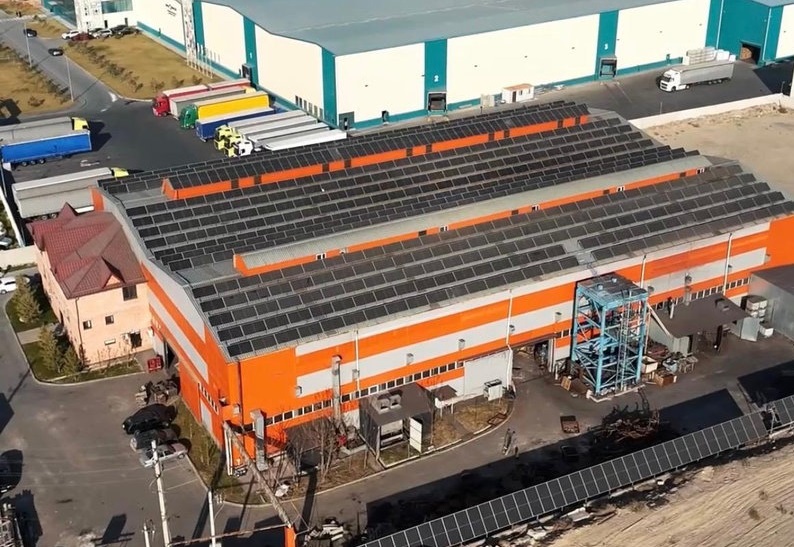
One of the significant sustainable development projects has been implemented at the industrial site of KASPY STEEL – the installation of a solar power plant developed with the participation of the Institute of Physics and Technology of Satbayev University. The project demonstrates effective integration of science and industry aimed at reducing carbon footprint and advancing renewable energy in Kazakhstan.
A solar power plant with a capacity of over 300 kW has been installed and commissioned at an iron casting plant in Shymkent. It supplies the enterprise with clean electricity, partially covering production needs and reducing dependence on conventional energy sources. This is especially important for the metallurgical industry, which is energy-intensive and has a significant environmental impact.
The project was implemented the AP15573872 grant program for commercialization of scientific developments, focused on the production and deployment of next-generation solar modules based on heterostructure elements. This technology offers high energy conversion efficiency and resilience to external conditions, making it promising for industrial use.
The Institute of Physics and Technology, one of Kazakhstan’s leading research centers in materials science and photovoltaics, played a key role in transferring technologies from science to the real sector of the economy. The development and production of solar panels, as well as their implementation at an operating enterprise, demonstrate a full innovation cycle – from scientific idea to industrial application.
For KASPY STEEL, a modern metallurgical plant with high quality standards and advanced production infrastructure, the adoption of solar energy became an important step toward greater environmental responsibility. The use of renewable energy sources helps reduce greenhouse gas emissions, improve energy efficiency, and strengthen business resilience amid the global energy transition.
The project also has a significant educational and scientific impact. It creates a foundation for training specialists in green energy, engineering, and sustainable development, providing students and researchers with access to real-world technology implementation cases. This contributes to the development of competencies востребованных in the future economy.
In a broader context, the initiative contributes to solving national and regional challenges related to renewable energy development, carbon reduction, and industrial modernization in Central Asia. The project directly supports the achievement of the UN Sustainable Development Goals, including SDG 7 (Affordable and Clean Energy), SDG 12 (Responsible Consumption and Production), and SDG 13 (Climate Action).
The implementation of a solar power plant at an industrial enterprise demonstrates how the synergy of science, education, and business can create sustainable technological solutions, shaping a new model of industrial development focused on sustainability, efficiency, and innovation.