
Development of urban electric vehicle infrastructure
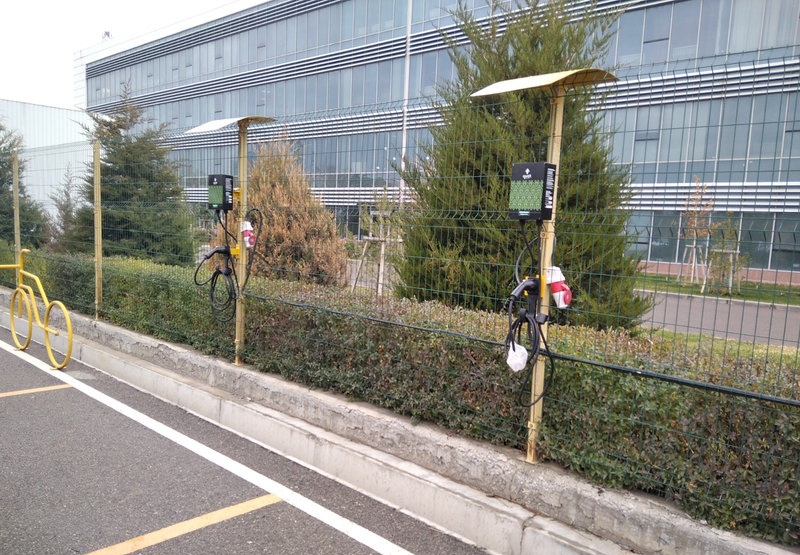
Satbayev University acted as a technology provider in a project aimed at developing sustainable urban infrastructure and reducing environmental impact. In 2024, within the framework of the project, 20 charging stations with a capacity of 7 kW and a GBT connector were installed on the territory of the Asia Trafo plant (Shymkent). The initiative corresponds to the goals of sustainable development, including the development of sustainable cities, the introduction of clean technologies and emission reduction.
The key partner was the Asia Trafo plant – the largest enterprise in Central Asia for the production of transformer equipment, which is part of Alageum Electric. The production and technological capabilities of the enterprise provided a reliable basis for the implementation of the infrastructure solution and its scaling. For Satbayev University, participation in the project meant a contribution to the development of applied engineering solutions and the opportunity, together with industrial partners, to create technological solutions that have a direct impact on the quality of life of the population.
The project is focused on creating accessible infrastructure for electric vehicle users and stimulating the transition to environmentally friendly transport. All stations operate in an open mode, which allows any electric vehicle owner in the city of Shymkent to use the charging opportunity without restrictions. This approach forms a new model of urban mobility based on accessibility and environmental responsibility.
A distinctive feature of the project is its systemic impact at the city level. The deployment of a network of charging stations forms the basic infrastructure for the development of electric mobility in Shymkent, reduces barriers to the transition to electric transport and contributes to the formation of an environmentally oriented urban environment. Thus, the project has an impact not only on individual users, but also on the city’s transport system as a whole, stimulating the transition to a more sustainable development model.