
SDG 2. Zero Hunger
For Satbayev University, this goal is linked to engineering and scientific solutions for water, climate, and resource sustainability of agricultural territories. As a technical university, Satbayev University contributes to SDG 2 through research on water, hydrogeology, climate risks, digital monitoring, and technologies for efficient use of natural resources.
Also, all food waste from the university territory is collected in separate waste sorting bins and recycled by our contractors and tenants. In our eco-hub, collected plastic waste is recycled and prepared for reuse.

What does this mean for Satbayev University
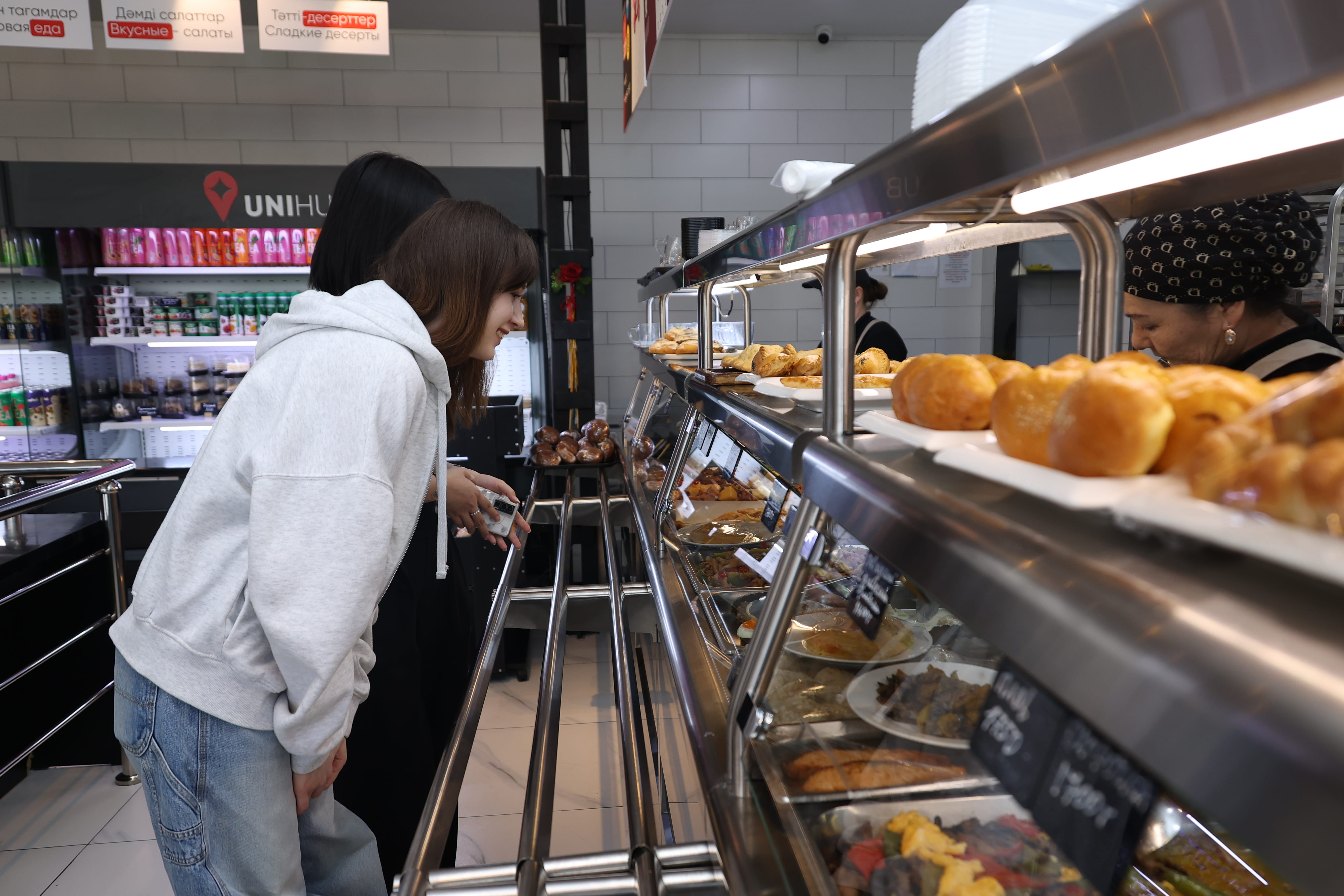
The university fosters a supportive campus environment, paying attention to issues of affordable and healthy student nutrition, including the development of canteens, socially oriented pricing approaches, and healthy menu elements. Initiatives in agrotechnology, food tech, and sustainable food systems, as well as support for needy students, are also of future importance.
Sustainable environment
Satbayev University’s sustainable procurement policy helps form a more sustainable and responsible supply system: the university considers quality, safety, environmental friendliness, waste reduction, and rational resource use in procurement. This contributes to creating a sustainable environment, supporting responsible suppliers, and using solutions that indirectly strengthen food security and the well-being of the university community.
Students from low-income families receive funds for meals. Discounts on hot food are provided in the Unihab gastronomic zone.
Research
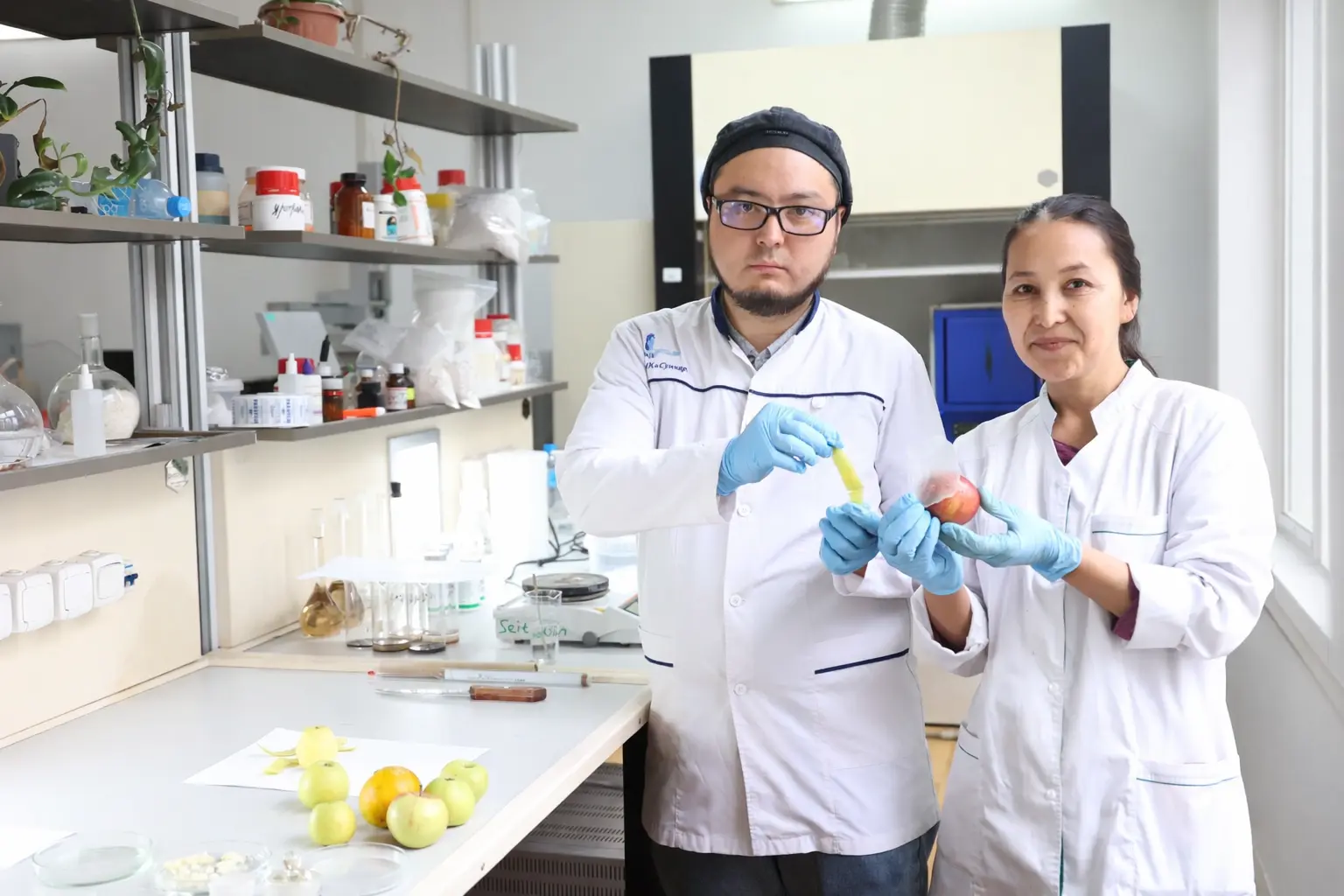
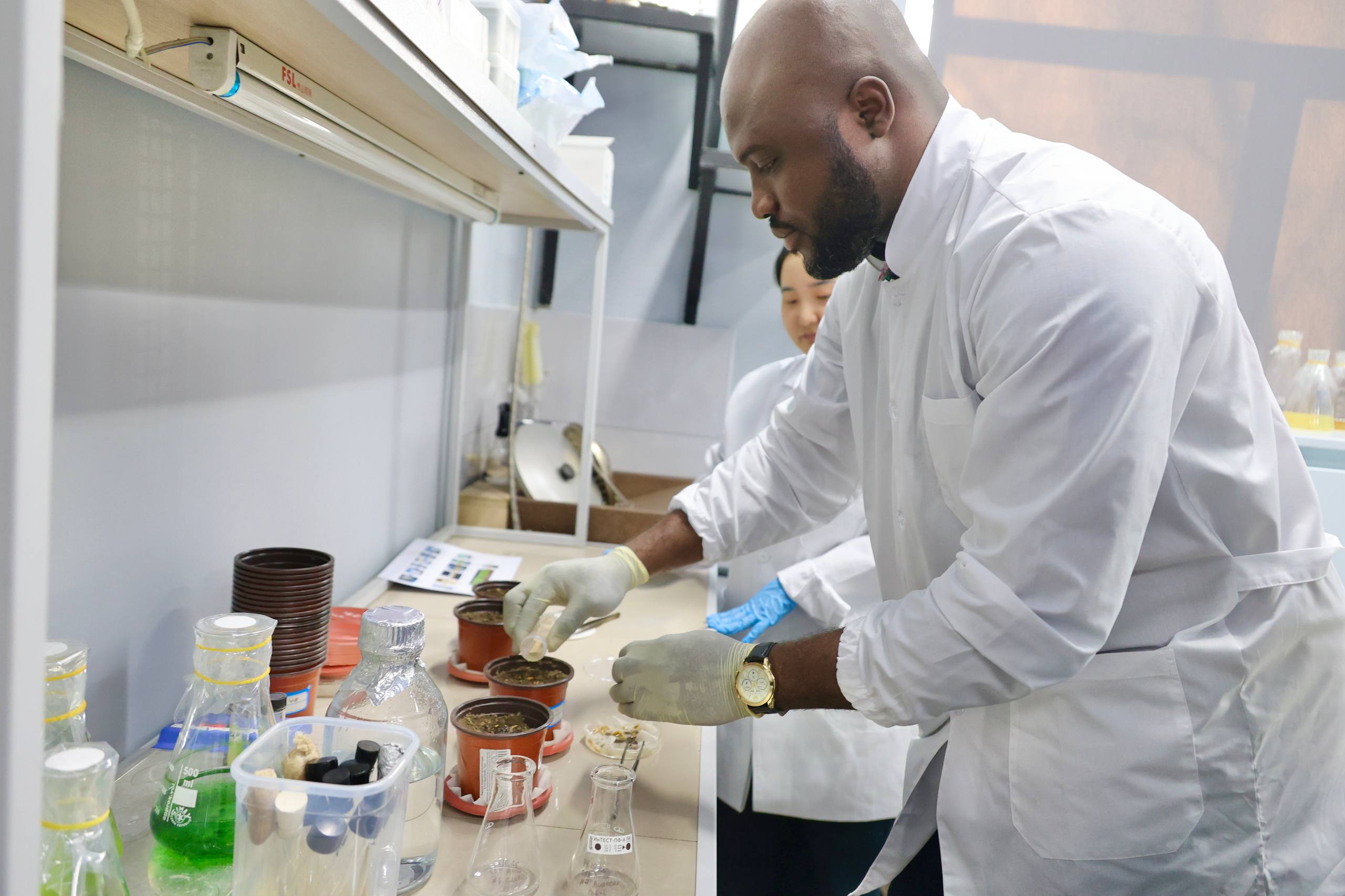
Satbayev University contributes to achieving SDG 2 through scientific research and technological solutions for sustainable agriculture. The university develops approaches in water-saving irrigation, rational use of groundwater, precision farming, plant drought resistance, biological crop protection, and effective pasture management. These studies help increase productivity, restore agricultural land, reduce risks for agricultural production, and strengthen food security in the regions of Kazakhstan.
Education
The key contribution through education is related to the “Water Resources and Water Use” program, implemented at Satbayev University within the “Agriculture and Bioresources” direction. Its goal is to train qualified specialists in water resource management, including groundwater, as well as the design and operation of water management systems. For SDG 2, this is particularly important because food security directly depends on irrigation, water availability, and sustainable management of agricultural resources.
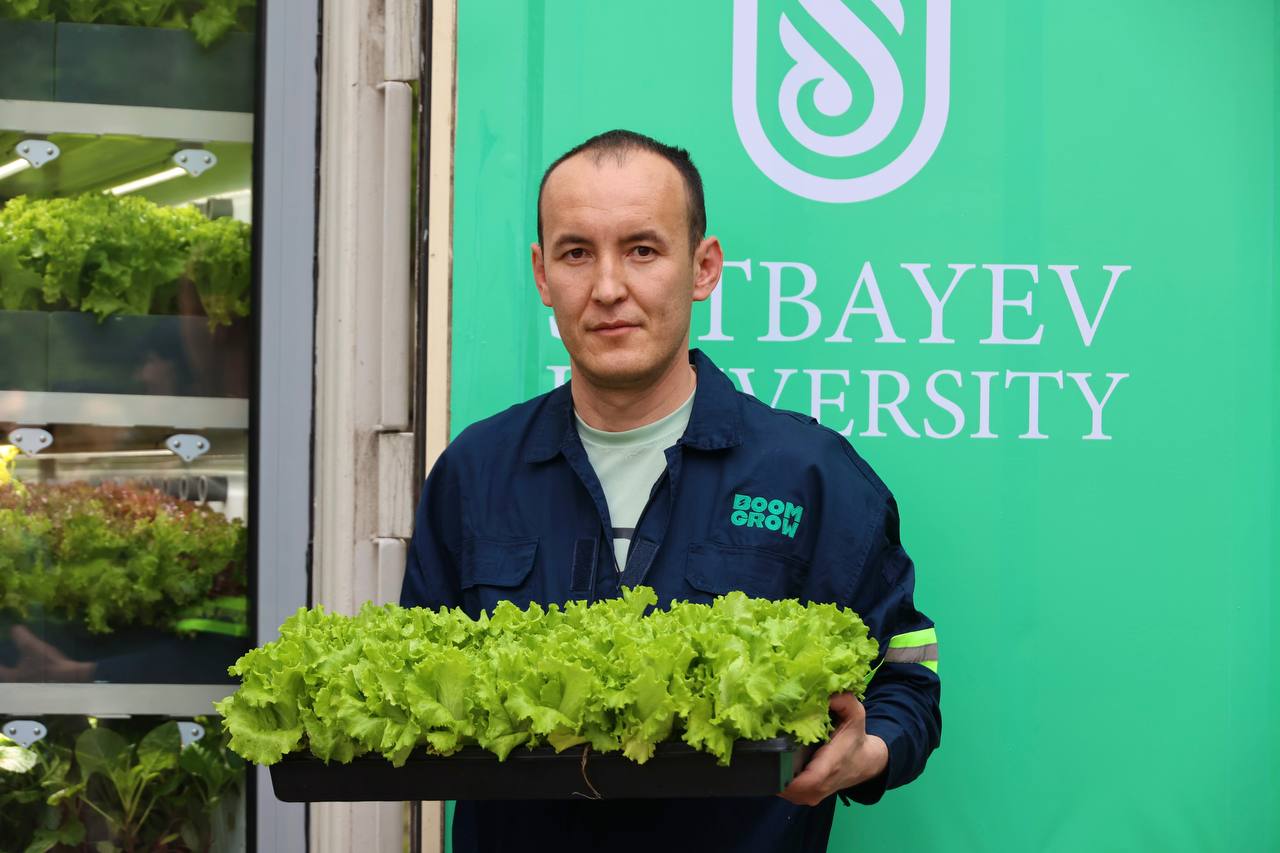
An important example is the first machine farm in Central Asia, BoomGrow, implemented on the university campus as part of the Green Campus initiative. This project serves as a living laboratory where students and researchers study vertical farming, artificial intelligence, and sustainable food production systems. The farm demonstrates how technology can grow environmentally friendly products year-round with lower water, land, and resource consumption, enhancing food security in urban environments and under climate change.